
Best Tire Recycling Methods for a Cleaner Future
2026-11-16
Every year, billions of tires reach the end of the road—but 'end' is rarely the right word. They pile up in landfills, leak toxins, and fuel dangerous fires. Turning that waste into a resource isn't just possible; it's already happening with smarter recycling methods. From crumb rubber to pyrolysis, the right approach depends on scale, budget, and output quality. At Kowloon Machinery, we've seen how the right equipment can turn a disposal problem into a profitable, cleaner operation. Here are the best methods worth considering for a genuinely cleaner future.
Crumb Rubber: The Workhorse of Tire Recycling Finds New Roads
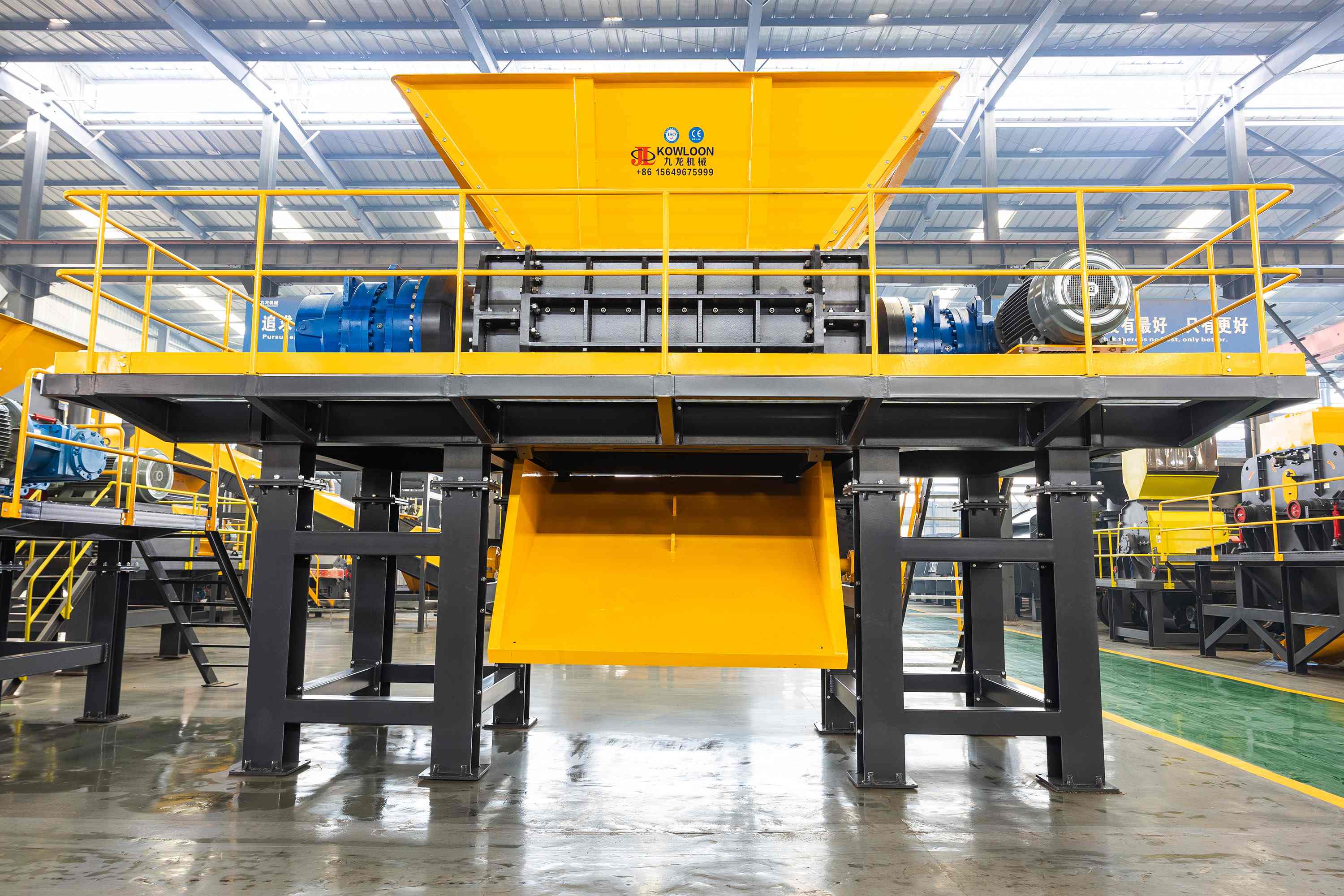
Crumb rubber has long been the quiet backbone of tire recycling. Made by shredding scrap tires and removing steel and fiber, it turns a persistent waste problem into a versatile raw material. For decades, the main destinations were playground mats, running tracks, and synthetic turf infill, where its shock absorption and durability proved invaluable.
Today, the material is branching into far more demanding roles. Engineers are blending finer grades of crumb rubber into asphalt to create quieter, longer-lasting roads that resist cracking in cold climates. Builders are testing it in concrete mixes and vibration-damping layers for rail lines, while automotive suppliers use it in mud flaps, brake pedals, and underbody coatings. These newer uses reward precise particle sizing and cleaner separation, pushing recyclers to upgrade their processes.
One of the most promising frontiers is in sustainable construction. Crumb rubber can partially replace sand or gravel in certain non-structural concrete, reducing weight and improving thermal insulation. It also shows up in permeable pavements that let rainwater soak through, helping cities manage stormwater. As markets expand, the old image of crumb rubber as mere filler is giving way to a reputation as an engineered material with a growing list of second lives.
Tire Pyrolysis: Cracking Old Rubber into Fuel and Carbon Black
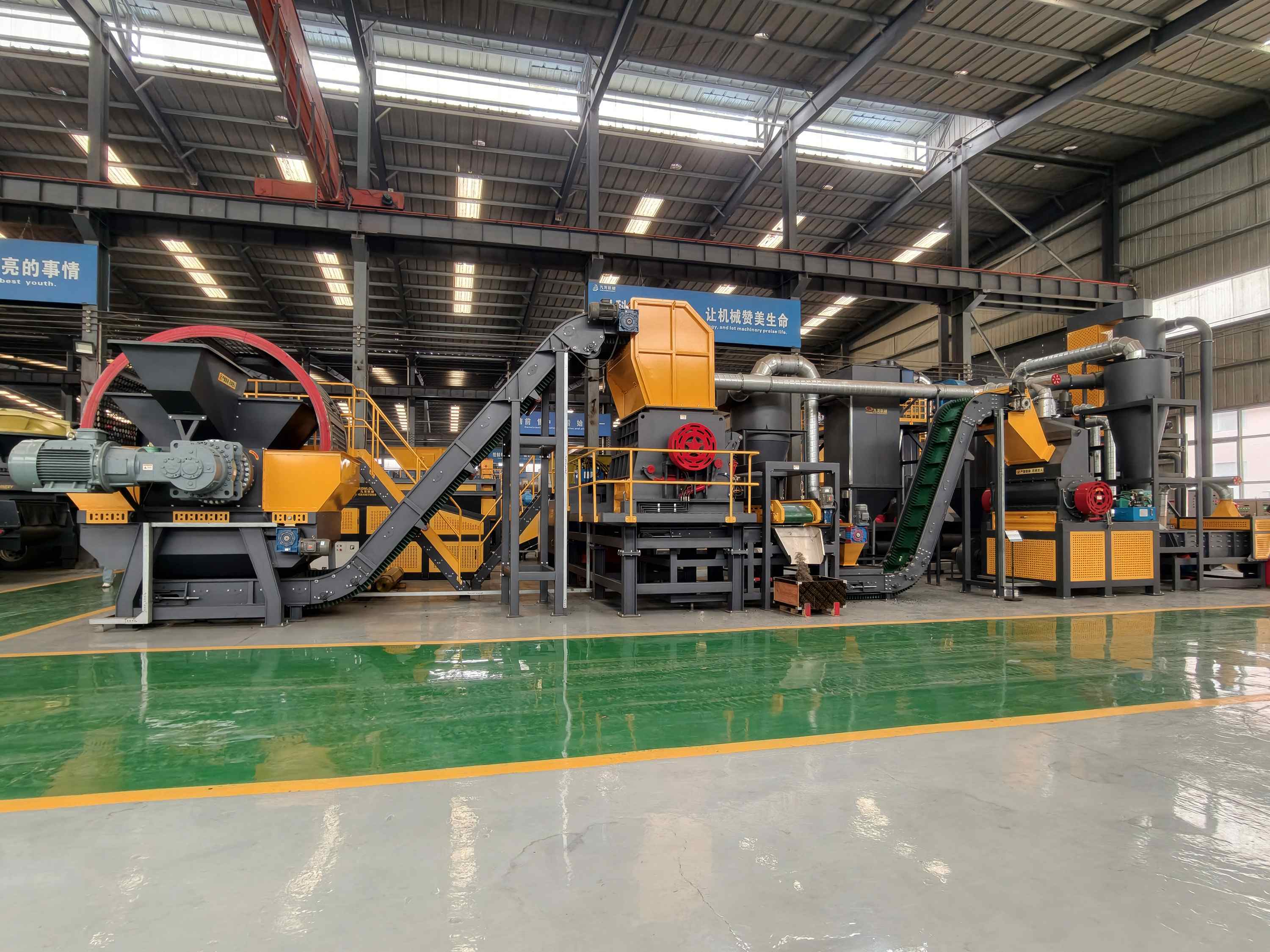
Old tires rarely degrade on their own, but when heated past 400°C in a sealed, oxygen-starved chamber they break apart into three surprisingly useful streams. The shredded rubber first turns into a vapor, then condenses into a dark, medium-weight oil that resembles a blend of diesel and naphtha. Alongside it, a solid char forms that, once milled and screened, behaves much like the carbon black originally used to reinforce the tire. The leftover steel belts drop out intact and can be sold directly to scrap processors.
The oil yield typically lands between 35% and 45% by weight, depending on how hot and how fast the reactor runs. At lower temperatures the oil carries more light fractions, while pushing toward 600°C shifts the balance toward gas and char. Operators often recycle the non-condensable gas back into the burner to maintain the heat, which cuts outside fuel consumption sharply. That closed loop is what makes the process more than a curiosity—it becomes a small but real way to recover energy from a material that otherwise ends up in landfills or illegal stockpiles.
The carbon black fraction is trickier to sell because its surface chemistry differs from virgin furnace black. Buyers in rubber manufacturing usually blend it at low percentages or use it in lower-stress products like hoses, mats, and sealants. Some plants upgrade the char further through acid washing or steam activation to open pores and remove ash. Tires also bring zinc oxide, silica, and a bit of sulfur into the mix, so handling the solid output requires careful dust control and sometimes a secondary milling step. These practical wrinkles keep tire pyrolysis from being a simple drop-in replacement for oil refining, but they also reward operators who treat it as a chemical process rather than a waste disposal shortcut.
Shredded Tires as Lightweight Fill: A Civil Engineering Win
Scrap tires shredded into fist-sized chunks weigh roughly half as much as conventional soil, which makes them a quietly powerful tool on soft ground. Instead of forcing deep piles or waiting out months of settlement, engineers can stack lightweight tire fill to build embankments and road bases that float over weak clays and organics. The savings in time and materials are immediate, and the work proceeds without the heavy surcharge loads that often crack adjacent structures.
The environmental upside is just as direct. Stockpiles of whole tires breed mosquitoes and pose a persistent fire hazard, yet shredding them into engineered fill turns a disposal headache into a useful construction layer. The irregular rubber pieces interlock well, drain freely, and provide a degree of thermal insulation that soil cannot match. Contractors do need to be mindful of exposed steel belts and occasional rubber dust, so most designs wrap the fill in geotextile and keep it below the groundwater table to avoid long-term weathering.
On highway projects across soft river deltas and old landfill sites, shredded tire fill has supported approach ramps and mechanically stabilized earth walls without the settlement battles that plague heavier backfills. Monitoring over two decades has shown minimal degradation of the rubber when it stays buried and confined, and the cost per cubic meter often undercuts lightweight expanded clay or foam glass. It is a rare case where a waste stream solves a geotechnical problem better than the virgin material it replaces.
Devulcanization Breakthroughs Let Rubber Be Rubber Again
For decades, recycled rubber has been a euphemism for ground-up filler. The sulfur cross-links that give vulcanized rubber its strength and elasticity also lock the polymer chains into a network that cannot be melted or reshaped. Most reclaim processes simply shred the material and break enough backbone bonds to make a crumb that can be mixed into new compounds, but the result behaves more like a cheap additive than real rubber.
A different approach is now moving from the lab to the factory floor. New catalytic systems target the sulfur bridges themselves, snipping C–S and S–S bonds while leaving the long hydrocarbon chains intact. Some use supercritical carbon dioxide to carry reagents deep into the rubber matrix; others apply microwave pulses or engineered enzymes to achieve the same effect with far less energy. The recovered polymer can be milled, compounded and re-vulcanized with only a modest drop in tensile strength and elongation. That shifts the conversation from downcycling to true material recovery, letting old tires and gaskets re-enter production as rubber, not just as inert powder.
Recycled Tire Playgrounds: Cushioning More Than Just Falls
Most people spot the spongy black surface under a swing set and think only of scraped knees avoided. But recycled tire playgrounds do far more than soften landings. Each square foot of that springy ground cover keeps a worn-out tire out of a landfill, where it would otherwise sit for centuries. That simple shift turns a routine municipal purchase into a quiet act of waste reduction, and kids get a surface that shrugs off rain, mud, and years of rough play without cracking or splintering.
The benefits ripple outward in ways that rarely make the sign at the park entrance. Because shredded tires drain water quickly, puddles vanish after a storm, which means fewer mosquito breeding spots and less downtime for recess. The material also stays cooler than black asphalt in summer and provides a firm, slip-resistant grip for running feet. Communities that choose recycled rubber often find the upfront cost comparable to wood chips, but without the annual top-ups or the constant raking back into place.
There is a subtle lesson embedded in every bounce. Children learn, without a single lecture, that old things can become new again. Parents notice the lack of splinters and the forgiving bounce under a tumbling toddler. Maintenance crews appreciate a surface that does not rot, attract termites, or get kicked onto the grass. In the end, a playground built from yesterday's tires cushions more than just falls - it softens the blow to the environment, to tight budgets, and to the idea that waste has only one destination.
Tire-Derived Fuel: Cement Kilns' Dirty Little Secret for Cleaner Clinker
Shredded tires disappear into the feed end of a cement kiln without much fanfare, yet they routinely replace a meaningful slice of the coal or petcoke that would otherwise fire the burner. The rubber burns hot and fast, pushing flame temperatures past 1,800°C while the loose steel belts and silica fillers ride along into the clinker chemistry. Kiln operators have known for decades that a steady diet of tire chips can shave fuel costs and smooth out temperature swings, but you won’t see this headline on a plant tour.
The “dirty little secret” label sticks because burning old tires sounds like exactly the kind of thing a sustainability report should hide. Yet inside the kiln’s long, alkaline, oxygen-starved sintering zone, the organics that worry regulators get torn apart before they can leave the stack. Sulfur from the rubber is scrubbed by the raw meal, zinc and iron end up locked in the clinker matrix, and the high heat destroys dioxins and furans rather than creating them. The result is clinker that meets the same strength specs with a smaller fossil carbon bill per ton.
What makes this practice quietly useful is that a cement kiln offers a disposal route that landfills and dedicated tire incinerators cannot match. Tires stockpiled outdoors breed mosquitoes and catch fire on their own, while dedicated burners without clinker chemistry often need expensive scrubbers for acid gases. In the kiln, the tire becomes part of the product—carbon for heat, steel for iron, ash for silica. The real secret isn’t that the industry burns tires; it’s that this awkward-sounding fuel actually nudges clinker production toward a lower-impact routine without anyone wanting to brag about it.
FAQ
They are typically ground into crumb rubber using either ambient or cryogenic processes. Ambient grinding tears the rubber at room temperature, producing irregular particles ideal for athletic tracks and rubber mats. Cryogenic grinding uses liquid nitrogen to freeze the rubber until it shatters cleanly, yielding finer powder for high-end molded products.
Pyrolysis heats tires in an oxygen-free chamber, so instead of combustion you get thermal decomposition. The tires break down into synthetic oil, carbon black, steel wire, and syngas. The oil can replace industrial diesel, the carbon black can go back into new rubber or plastics, and the syngas often powers the pyrolysis reactor itself, making the process nearly self-sustaining.
Yes, when processed properly. Rubberized asphalt mixes crumb rubber with bitumen, improving skid resistance, reducing road noise, and extending pavement life. The key is using a wet process where rubber is blended into the binder at high temperature, which locks the particles into the asphalt matrix so they don't leach out into stormwater.
Grinding only breaks tires into small pieces, but the rubber remains vulcanized — permanently cross-linked and impossible to melt or reshape. Devulcanization selectively breaks those sulfur bridges, restoring plasticity without destroying the polymer chains. This lets scrap rubber be compounded into new tires, shoe soles, hoses, and seals, closing the loop instead of just downcycling.
Absolutely. Whole tires are used in civil engineering as lightweight fill for highway embankments, retaining walls, and drainage layers. They are often baled or bound together, eliminating the energy cost of shredding. In earthquake-prone areas, tire bales have even been used as foundation isolators because they absorb vibration and reduce ground motion.
Retreading replaces the worn tread on a sound tire carcass, extending its service life by 80 to 100 percent at about one-third the cost of a new tire. For commercial truck and aircraft fleets, this is standard practice. It dramatically reduces the number of tires entering the waste stream and saves around 15 gallons of oil per tire compared to manufacturing new.
Cement kilns can feed whole or shredded tires as a supplemental fuel because they operate at extremely high temperatures that ensure complete combustion. The steel belts in the tires provide iron oxide, which is a required raw material in cement clinker production, so both the rubber and steel are used. Modern kilns have strict emission controls that minimize dioxins and particulate matter.
Conclusion
Crumb rubber remains the most visible success story in tire recycling. By mechanically grinding scrap tires into fine granules, this material finds its way into asphalt modifiers, running tracks, and molded goods like mats and curbs. The result is a quieter, longer-lasting road surface that also reduces the need for virgin polymers. In parallel, shredded tires serve as lightweight fill for highway embankments and retaining walls. Because they weigh far less than soil and drain freely, engineers can build on soft ground without excessive settlement or the need for heavy compaction equipment. Recycled tire playground surfaces offer another practical outlet, turning what was once a disposal headache into impact-absorbing layers that cushion falls and outlast wood chips or sand.
For a deeper chemical conversion, pyrolysis heats whole or shredded tires in the absence of oxygen, yielding fuel oil, carbon black, and recoverable steel. While the economics have been uneven, newer plants are refining the process to make the oil suitable for industrial burners and the char usable in rubber compounding. Devulcanization breakthroughs push even further: by selectively breaking sulfur crosslinks without destroying the polymer backbone, these methods allow reclaimed rubber to be blended back into new tires and technical goods, closing the loop. Tire-derived fuel in cement kilns remains controversial. It burns hot and can replace some coal, but emissions of particulates and zinc need tight controls. Across all these routes, the cleanest future depends on matching the right method to local waste streams, energy demand, and product markets.
Contact Us
Contact Person: Ray
Email: [email protected]
Tel/WhatsApp: +86 13733817580
Website: https://www.zzkowloon.com/