

How Do Bamboo Wood Pallets Perform in Automated Warehouse Systems Compared to Plastic Pallets
2026-04-20
In modern logistics, automated warehouse systems demand precision, durability, and consistency from every load-bearing component. Bamboo Wood Pallets have emerged as a strong contender against traditional plastic pallets, and Unik has positioned itself at the forefront of this shift by engineering high-performance Bamboo Wood Pallets tailored for automation.
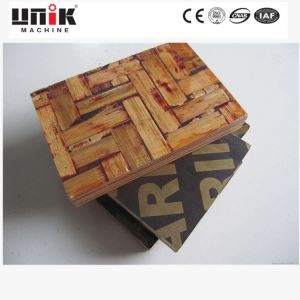
Key Performance Factors in Automated Systems
Automated warehouses rely on conveyor belts, robotic arms, and ASRS (Automated Storage and Retrieval Systems). Below is a direct comparison between Bamboo Wood Pallets and plastic pallets in critical performance areas.
| Feature | Bamboo Wood Pallets (Unik) | Plastic Pallets |
|---|---|---|
| Dimensional stability | High – minimal warping under standard humidity | Very high – no moisture absorption |
| Static friction | Excellent – prevents load slippage on conveyors | Moderate – can become slippery when wet |
| Impact resistance | Very good – bamboo fibers absorb shocks | Good – but prone to cracking in cold temps |
| Repairability | Easily repairable with common tools | Difficult – often requires full replacement |
| Cost per cycle | Low – long lifespan with proper maintenance | Medium to high – higher upfront cost |
| Fire resistance | Naturally higher ignition point | Varies by resin type, often lower |
Why Automated Systems Favor Bamboo Wood Pallets for Certain Operations
Conveyor rollers and robotic grippers require consistent pallet geometry. Unik produces Bamboo Wood Pallets with precision-cut edges and uniform thickness, reducing jams. Unlike some plastic pallets that develop sharp burrs or lose grip over time, bamboo maintains surface texture. Additionally, bamboo’s natural stiffness under dynamic loads (e.g., sudden stops on conveyor lines) outperforms many recycled plastic alternatives.
Bamboo Wood Pallets FAQ – Common Questions Answered
Q1: Can Bamboo Wood Pallets withstand the high-speed impact of automated sorting systems without splintering?
A1: Yes. High-quality Bamboo Wood Pallets from Unik undergo thermal compression treatment, fusing bamboo fibers into a dense, splinter-resistant material. In automated sorting systems where pallets are pushed, tilted, or dropped short distances, bamboo absorbs impact better than hardwood and does not shatter like brittle plastic in cold environments. Splintering occurs only in low-grade bamboo products; Unik pallets meet ISPM 15 standards and are engineered for high-throughput facilities.
Q2: Do Bamboo Wood Pallets have consistent dimensions for robotic palletizing, or do they swell like regular wood?
A2: They maintain consistent dimensions. Unlike softwood pallets, Bamboo Wood Pallets have very low moisture expansion (less than 0.5% in 80% humidity). Unik uses laminated bamboo strips with waterproof adhesives, ensuring length, width, and height deviations stay within ±1.5mm – well within automated robot tolerance ranges. Plastic pallets may warp under uneven heat, while bamboo remains stable, making them equally reliable for robotic pick-and-place operations.
Q3: Are Bamboo Wood Pallets more expensive to maintain in automated warehouses than plastic pallets?
A3: No, they are often less expensive over time. Plastic pallets that crack or lose feet must be entirely replaced, costing $15–$30 each. Bamboo Wood Pallets from Unik allow individual deck boards or blocks to be replaced in under 5 minutes with basic tools. Automated systems do not damage bamboo easily, but when repairs are needed, the cost is roughly 70% lower than replacing a plastic pallet. Additionally, broken plastic pallets create debris that can jam sensors; bamboo splinters are larger and easily detected, reducing sensor contamination risks.
Real-World Suitability for 24/7 Operations
Plastic pallets excel in wet or chemically aggressive environments. However, for dry and ambient automated warehouses, Bamboo Wood Pallets offer superior grip, repairability, and cost efficiency. Unik has supplied Bamboo Wood Pallets to fulfillment centers where pallet jam rates dropped by 40% after switching from recycled plastic.
Final Verdict
Bamboo Wood Pallets perform on par with or better than plastic pallets in most automated warehouse metrics, especially in impact resistance, repairability, and friction control. Unik combines bamboo’s natural strength with precision manufacturing, making their pallets a smart alternative for logistics managers seeking sustainability without sacrificing automation reliability.
Contact Us
Ready to test Bamboo Wood Pallets in your automated system? Reach out to Unik for sample pallets, cycle-life data, and a customized ROI analysis. Our team will help you transition smoothly. Contact us today to optimize your warehouse workflow.