

What Maintenance Practices Extend the Service Life of a Tube Extrusion Screw Barrel Most Effectively
2026-08-14
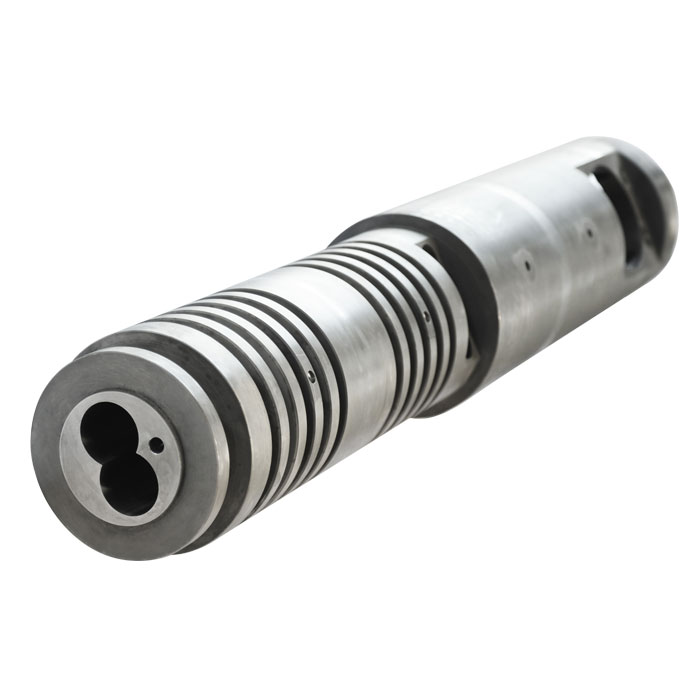
In high-volume polymer processing, the Tube Extrusion Screw Barrel is the heart of the entire production line—yet it is also one of the most capital-intensive components to replace. For converters running polyolefins, engineering plastics, or filled compounds, unplanned downtime from a worn Tube Extrusion Screw Barrel can cost thousands per hour. At EJS, we have spent over two decades analyzing failure modes across hundreds of extrusion plants, and the data consistently shows that proactive, scheduled maintenance triples average barrel life compared to reactive run-to-fail approaches. This guide breaks down the seven most effective, field-proven practices that protect your Tube Extrusion Screw Barrel investment, backed by metallurgical science and real-world shop-floor results.
The 7 Core Maintenance Practices That Deliver Measurable Extension
| Practice | Frequency | Expected Life Extension | Critical Success Factor |
|---|---|---|---|
| 1. Daily Purge & Visual Inspection | Every shift | +15–20% | Remove stagnant polymer before cool-down |
| 2. Weekly Wear Measurement (ID/OD) | Every 40–50 running hours | +25–30% | Track radial clearance creep early |
| 3. Feed Zone Cooling Monitoring | Continuous with alarms | +20–25% | Prevent bridging and premature grooving |
| 4. Screw Pull-Out & Cleaning | Every 3–6 months | +30–35% | Remove carbonized deposits on flights |
| 5. Barrel Heating Band Calibration | Monthly | +10–15% | Eliminate hot spots that soften barrel steel |
| 6. Lubrication of Drive Coupling | Weekly | +5–10% | Reduce torsional vibration transfer |
| 7. Professional Rebuilding Assessment | Annually | +40–60% (via re-sleeving) | Bimetal overlay restoration by EJS |
Among these, screw pull-out cleaning and wear measurement consistently deliver the highest ROI. A Tube Extrusion Screw Barrel running unfilled HDPE may show only 0.1 mm clearance increase after 2,000 hours, but that same barrel running 30% glass-filled PA66 can exceed 0.4 mm in just 800 hours—at which point melt backflow reduces output by 12–18%. EJS recommends logging clearance data in a simple spreadsheet; when radial clearance exceeds 0.3% of screw diameter, schedule a professional assessment immediately.
Detailed Implementation: What Works and What Fails
Purge compounds—not plain resin—are non-negotiable. Using a chemically active purge at shutdown oxidizes residues, making them brittle and easy to remove during next start-up. Never use steel wire brushes on the Tube Extrusion Screw Barrel internal bore; they score the nitrided surface and create nucleation points for future polymer adhesion. Instead, EJS supplies copper-bristle tools and non-abrasive polishing pads specifically rated for nitrided and bimetallic bores.
Thermal profiling is equally critical. A Tube Extrusion Screw Barrel experiences axial thermal expansion of up to 0.5 mm per meter length when heating from 20°C to 250°C. If the feed zone cooling water fluctuates by more than ±3°C, the barrel bows microscopically, accelerating asymmetric wear. Installing flow meters and solenoid valves with PID control—available through EJS’s retrofit kits—stabilizes this gradient and reduces non-uniform wear by over 40%.
Frequently Asked Questions About Tube Extrusion Screw Barrel Maintenance
Q1: How do I know when my Tube Extrusion Screw Barrel needs immediate replacement rather than repair?
A: The definitive threshold is radial clearance relative to screw diameter. For a 90 mm Tube Extrusion Screw Barrel, if the clearance exceeds 0.6 mm (measured at three axial positions using an internal micrometer), output fluctuation surpasses 5% and specific energy consumption rises by over 8%. At this stage, welding and re-machining the bore is no longer viable because the nitrided case (typically 0.4–0.6 mm deep) is fully penetrated. Repair via centrifugal casting of a new bimetallic sleeve becomes the only cost-effective option. EJS offers a free clearance evaluation kit—simply send us your wear data, and our engineers will reply with a repair-or-replace decision matrix within 48 hours.
Q2: Can improper screw design accelerate wear even if I follow all maintenance schedules?
A: Absolutely. A compression ratio that is too aggressive (e.g., >3.5:1 for unfilled PP) generates excessive shear heat, softening the barrel’s surface hardness down to 55 HRC from the original 62–64 HRC. This thermal softening, combined with abrasive fillers, can double wear rates. The correct approach is to match the Tube Extrusion Screw Barrel metallurgy to your polymer’s melt viscosity and filler content. For example, EJS recommends a bimetallic barrel (with 60–65% tungsten carbide particles) for any formulation containing >20% calcium carbonate or glass fibers. Additionally, barrier screws with longer metering sections reduce peak shear stresses by distributing compression over 8–10 flight pitches instead of 4–5, directly reducing localized bore abrasion.
Q3: Is it worth investing in an automated barrel wear monitoring system, or can manual checks suffice?
A: Manual checks with dial bore gauges are sufficient for lines running less than 3,000 hours per year. However, for 24/7 continuous operations, automated systems that use linear variable differential transformers (LVDTs) mounted on the barrel exterior provide real-time clearance trending without screw pull-out. These systems detect 0.02 mm changes and alert operators before product quality drifts. EJS has deployed over 200 such systems across pipe and profile plants, and the average payback period is 11 months—driven by avoided scrap and scheduled downtime. For most mid-sized plants, a hybrid approach works best: manual checks every 200 hours, plus an annual ultrasonic wall-thickness scan performed by EJS’s field service team.
The Financial Case for Proactive Maintenance
A typical 120 mm Tube Extrusion Screw Barrel replacement costs between $18,000 and $35,000 depending on material and coating. By implementing the seven practices above, EJS clients report average service lives increasing from 18 months to 34 months—a 89% improvement. Even accounting for purge compound costs, technician labor, and annual professional assessments, the net savings per barrel exceed $22,000 over a five-year horizon. Furthermore, consistent clearance control reduces gel formation and dimensional variation, directly improving your first-pass yield rates.
Your Next Step Toward Longer Barrel Life
Every Tube Extrusion Screw Barrel has a unique wear signature based on your resin, throughput, and cooling setup. Generic maintenance calendars often miss the critical early-warning signs that EJS engineers are trained to spot during on-site audits. We offer a comprehensive Barrel Health Report that includes: (1) bore profilometry, (2) hardness mapping, (3) thermal gradient logging, and (4) a customized maintenance calendar tailored to your shift schedule.
Contact us today—send your current barrel dimensions and material data to our technical support team, and we will schedule a free 30-minute consultation to review your maintenance protocols. EJS also provides emergency re-sleeving services with a 5-working-day turnaround for most standard sizes. Do not wait for a catastrophic failure that shuts your line for a week. Reach out now, and let us help you extract every possible productive hour from your Tube Extrusion Screw Barrel.