

Which materials provide the best wear and corrosion resistance for single screw barrels
2026-05-14
In the world of plastics processing, the longevity and efficiency of a Single Screw Barrel depend heavily on the materials used in its construction. Processors handling abrasive or corrosive polymers frequently ask: which materials truly offer the best protection? For over a decade, EJS has engineered high-performance Single Screw Barrel solutions, and the answer lies in matching the alloy and lining to your specific operating environment.
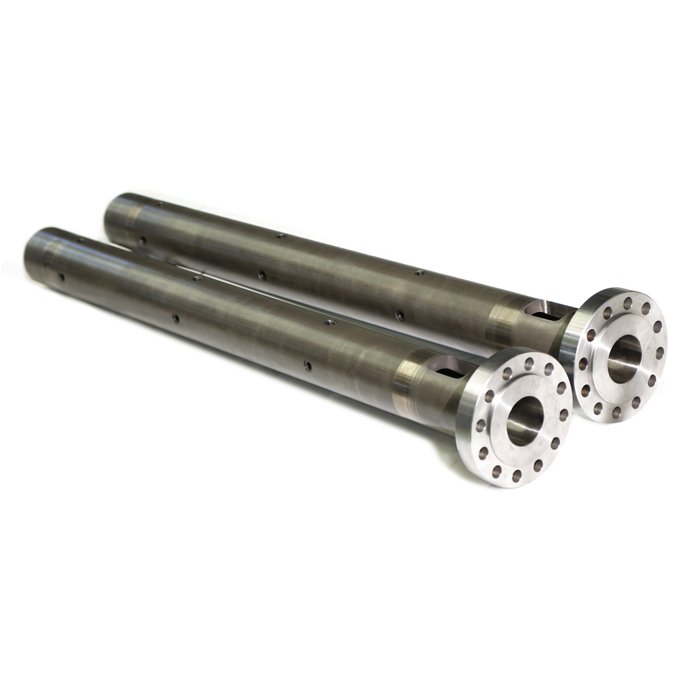
Wear-Resistant Materials
Abrasive fillers like glass fiber, calcium carbonate, or mineral powders rapidly erode standard nitrided steel. The following base and lining materials provide superior wear resistance:
| Material Type | Composition / Hardness | Best Application |
|---|---|---|
| Nitrided Steel (38CrMoAlA) | 900–1000 HV surface case | Unfilled or low-abrasive polymers (PP, PE) |
| Bimetallic – Centrifugal Cast | High-Cr, Ni, or Co alloy (58–65 HRC) | Glass-filled (30–50%) nylons, PET, PBT |
| Powder Metallurgy (PM) Steel | Vanadium carbide rich (65–68 HRC) | Highly abrasive compounds, WPC, ceramic fillers |
| Tungsten Carbide Overlay | 1200–1400 HV | Extreme abrasion with corrosive elements |
Corrosion-Resistant Materials
Processing PVC, fluoropolymers, or brominated flame retardants releases acidic byproducts (HCl, HF). Standard steels fail rapidly. EJS recommends these corrosion-resistant options:
-
Sleeved Bimetallic Barrels – Hastelloy C-276 or Inconel 625 liners (excellent acid resistance)
-
Stainless Steel Screws – 440C or 17-4 PH (hardened martensitic stainless)
-
Colmonoy 56 – Nickel-based alloy with boron; outstanding against PVC degradation
-
Chrome-Plated Surfaces – 50–80 microns thick; effective for mildly corrosive polymers
Optimal Combined Protection: Bimetallic Barrels + Hardfaced Screws
For simultaneous wear and corrosion (e.g., 30% glass-filled flame-retardant PA66), a Single Screw Barrel from EJS using a centrifugally cast bimetallic barrel (nickel-chromium-boron matrix with tungsten carbide) paired with a screw hardfaced with Colmonoy 83 offers the longest service life.
Single Screw Barrel FAQ
Question 1: How can I tell if my Single Screw Barrel is failing due to wear or corrosion?
Answer: Wear typically appears as a gradual drop in output rate, increased melt temperature, or a rough, grooved inner barrel surface visible at the feed end. Corrosion shows as pitting, intergranular cracking, or a black/dark residue on the screw flights and barrel wall. EJS recommends regular pull-out inspections every 6–12 months. Wear reduces dimensions evenly; corrosion attacks grain boundaries and creates localized craters.
Question 2: Is a bimetallic Single Screw Barrel always better than a nitrided one
Answer: No. A nitrided Single Screw Barrel (38CrMoAlA) is superior for unfilled resins like pure ABS or PS because it offers excellent fatigue resistance, lower cost, and easier repair. However, once glass fiber content exceeds 15%, or when processing PVC/CPVC, a bimetallic Single Screw Barrel from EJS lasts 3–5 times longer. The decision must be based on polymer type, filler percentage, and operating temperature.
Question 3: Can I combine a wear-resistant screw with a corrosion-resistant barrel in one Single Screw Barrel system
Answer: Yes, and EJS frequently designs such hybrid Single Screw Barrel systems. For example, a stainless steel screw (corrosion-resistant) paired with a centrifugally cast bimetallic barrel (wear-resistant) works well when the polymer is corrosive but unfilled. Conversely, a Colmonoy hardfaced screw (wear-resistant) with a Hastelloy-lined barrel (corrosion-resistant) handles 40% glass-filled flame-retardant PBT. Always ensure the hardness differential does not cause the screw to damage the barrel lining.
Contact Us
Optimizing your Single Screw Barrel material selection directly reduces downtime and repair costs. Whether you need a nitrided standard design or a high-performance bimetallic alloy solution, EJS delivers precision-engineered barrels and screws tailored to your exact polymer stream. Contact us today for a free wear assessment and let our engineers extend your screw and barrel life by up to 300%.